
The madman of the small town.
Every small town had its madman. Some had more than one.
My hometown was no different.
Everyone knew Kiko, although almost no one knew his family.
He walked through the streets at the same hours every day, with such precision that, had he been a philosopher, one could have set the clocks by his steps.
Tall and thin, always with a broad smile on his face. He walked fast. Whenever someone asked him his name, the same answer would come, sung in verse:
— João Batista de Oliveira, thin-legged and swift, carnation of the young ladies and rosemary of the girls.
That was the only expression that ever came out of his mouth. We never heard him say another word.
His destination never varied either: the town’s central square. There he would stay, two full hours on the swing, until lunchtime. In the afternoon he would return and swing until sunset.
Just seeing him on the swing was enough to make my stomach turn — as people say in the countryside of Paraná — because I could never bear to watch someone swinging without feeling nauseated.
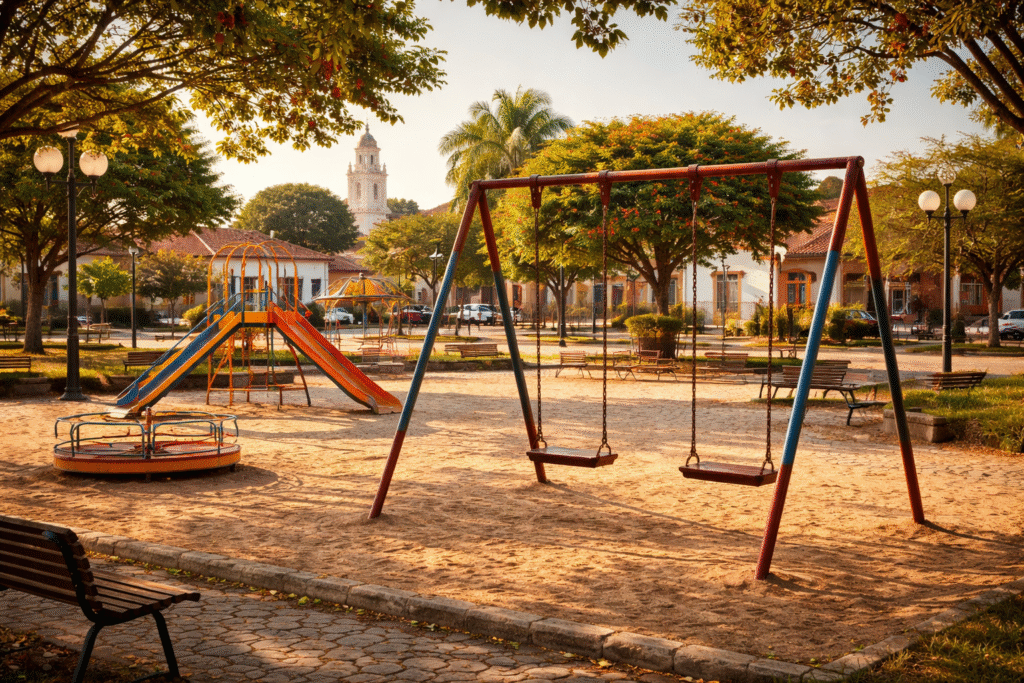
There was also a second madman: Pedro of the Briefcase. A man of about sixty. People said he had once had a family and children, until one day, suddenly, he went mad and began wandering the streets with a briefcase stuffed with papers. At any street corner, especially near the taxi stand, he would take out a document and stare at it fixedly, as if reading something invisible.
Apart from that, he spoke softly to himself, inaudible words, while rubbing the thumb and forefinger of his left hand over his head, as though he were cultivating fabulous ideas.

And that was that: we knew they were both madmen. If someone asked me what a madman was, I would not know how to define it. But I would point to the two of them, especially because there was no other madman around — at least, apparently.
“Madman” was a simple, self-explanatory word.
In the neighboring town, there was also “Calculation.”
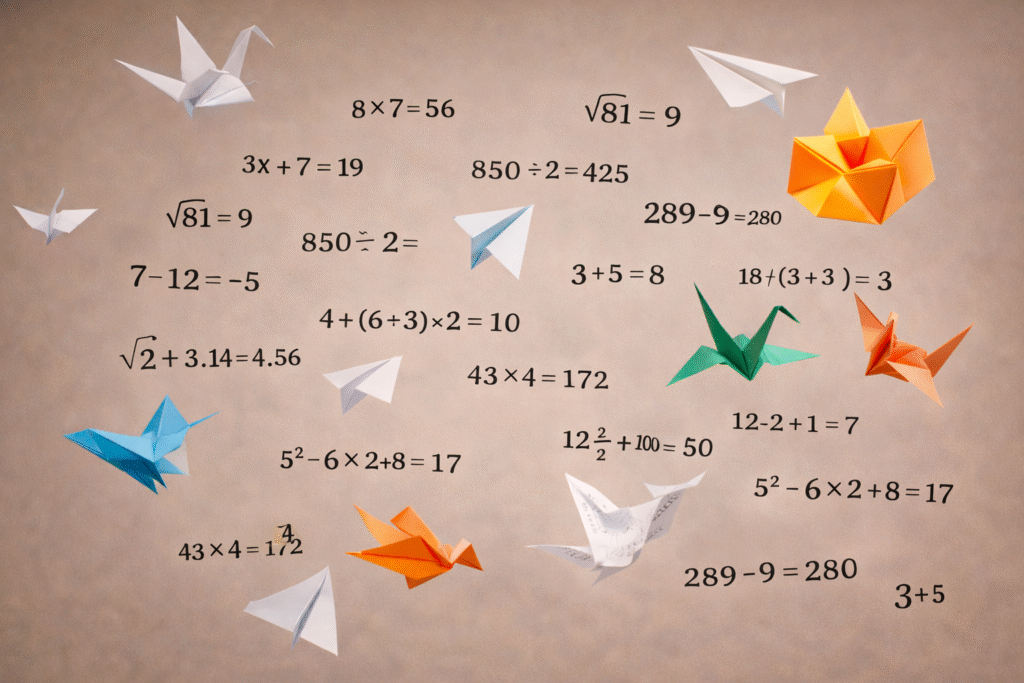
A peculiar madman: all one had to do was give him any multiplication, and he would close his eyes, press his index finger to his forehead, murmur a few numbers — “carry the 1, bring down the 2, subtract 5” — and within seconds spit out the exact result. Not even a calculator could keep up with him.
Besides that, he folded sheets of paper, and from them emerged horses, dragons, temples, delicate figures. Only many years later did I discover that this had a foreign name: origami. But “Calculation” never spoke of Japan; he merely let his hands work.
They called him mad. I still do not know.
I no longer live there. Nor have I heard any more about madmen in my hometown. I think they no longer exist. Or perhaps they have changed names. Now that we have the Priests of the Word, it is quite likely that “madman” has ended up on the Index. Because everything changes — even madmen.
Kiko himself changed. One day, a health agent decided to take him to the asylum in the big city.
I thought there were no madmen in big cities. Perhaps because I almost never went to them. Perhaps because they hid them, or sent their madmen to small towns. Perhaps they received some treatment and stopped being mad. Or, who knows, perhaps there they went by another name. I never knew.
The fact is that Kiko came back different. He no longer sang his verse, for he no longer had thin and swift legs: he had returned fat and slow. His smile, too, had stayed behind.
He had even lost his punctuality. Only the habit of the swing remained. But now he swung from morning until the end of the day, without stopping. Hours and hours in the same movement.
And I remained the same: always with my stomach turned.
In short, in my town we had Kiko and Pedro. In the neighboring town, there was Calculation.
One for the swing, another for the papers, and the third for the numbers. Three distinct manifestations of what we called mad.
But if someone were to think about it a little more carefully, perhaps he would realize that none of us entirely escaped those same manias: we all had our swings, our papers, and our endless calculations.
Porto Velho, March 2026
Libersum
The words used to name madness have never been merely medical: they also reveal how societies draw the line between normality and difference. A useful introduction to this broader discussion appears in Mad Studies – what it is and why you should care.
Also read the author’s short story: Amerindia, the Singular — war, power, numbers, memory.